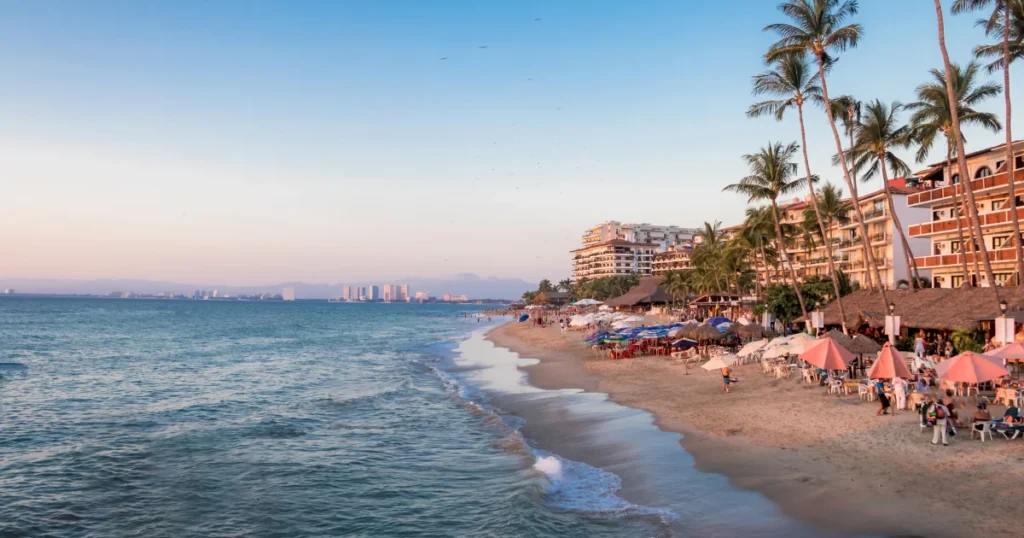
What $1,500 CAD/Month Actually Gets You in Puerto Vallarta, Lisbon, and Chiang Mai
$1,500 CAD a month. That’s roughly what a Canadian on CPP and OAS takes home. It’s what a remote worker might budget for living expenses after savings. It’s a number a lot of people land on when they first start Googling “can I actually afford to live abroad?”
The answer is yes — but the life you get for that $1,500 looks radically different depending on where you spend it.
We took the three cities Canadian expats ask about most — Puerto Vallarta, Lisbon, and Chiang Mai — and mapped out exactly what $1,500 CAD buys in each one. Same budget. Three very different lives.
This post contains affiliate links. We may earn a commission at no extra cost to you.
All figures in CAD. Based on early 2026 data. Exchange rates fluctuate — verify before making financial decisions.
The Quick Comparison
| Category | Puerto Vallarta | Lisbon | Chiang Mai |
|---|---|---|---|
| Apartment you’d get | Basic 1BR, outside Zona Romántica | Studio or room in shared flat, outer neighbourhood | Modern 1BR condo with pool, central Nimman |
| Rent portion | $700-900 | $800-1,100 | $400-600 |
| Left for everything else | $600-800 | $400-700 | $900-1,100 |
| Eating out | Tacos and fondas daily, restaurants weekly | Cooking at home, occasional pastel de nata splurge | Street food and restaurants every meal if you want |
| Overall comfort level | Functional — you’re managing | Tight — you’re counting | Comfortable — you’re thriving |
That’s the headline. Now here’s what each city actually feels like at this budget.
Puerto Vallarta: $1,500 CAD/Month
Your Apartment
Forget the beachfront condo with the infinity pool. At this budget, you’re renting in Versalles, Fluvial Vallarta, or the edges of 5 de Diciembre — real neighbourhoods where locals live, a 10-15 minute bus ride from the beach. Expect a basic furnished one-bedroom: functional kitchen, air conditioning (essential from May to October), and internet. Clean and safe, but not Instagram-worthy.
Budget: $700-900 CAD/month. In snowbird season (November-April), push toward $900. In summer, you can negotiate closer to $700. A 12-month lease gets you the best rate.
Your Food
This is where PV shines on a budget. A taco plate at a local fonda runs $3-5 CAD. A full comida corrida (set lunch) at a neighbourhood restaurant: $5-8 CAD. Weekly grocery shopping at Soriana or the local tianguis (street market): $40-60 CAD for one person eating well.
At $300-400 CAD/month on food, you eat like a local — and honestly, local Mexican food is better than what most tourist-facing restaurant menus serve. The torta ahogada from the lady on your corner will ruin you for every sandwich you’ve ever had. Eating at neighbourhood fondas and tianguis isn’t just cheaper — it supports the families and small businesses that make these communities what they are. That matters.
Your Life
After rent and food, you’ve got $200-400 left. That covers your phone ($15 CAD), utilities ($60-80 CAD), and leaves $100-300 for transport, the occasional cerveza on the malecón, and maybe a day trip to Sayulita. It’s not lavish. You’re choosing between the restaurant dinner and the weekend excursion, not doing both.
But here’s the thing about PV at this budget: the beach is free. The sunsets are free. The malecón walk is free. The Canadian snowbird community hosts potlucks, bridge games, and coffee mornings that cost nothing. If you’re the kind of person who measures quality of life by what you do, not what you spend, $1,500 in PV is a dignified, pleasant life.
The catch: No room for health insurance in this budget. That’s a problem. If you’re under 65, budget travel insurance through SafetyWing (check their pricing calculator for current rates) — but that means something else gives. We’d honestly recommend $1,800 as the realistic PV floor for a Canadian who wants to cover their health properly.
Full cost breakdown: Cost of Living in Puerto Vallarta for Canadians
Lisbon: $1,500 CAD/Month
Your Apartment
We’re going to be direct: $1,500 total budget in Lisbon is tight. Rent eats most of it.
For $800-1,100 CAD, you’re looking at a studio or a room in a shared apartment in Benfica, Amadora, or the outer reaches of the metro. Modern enough, safe, functional — but not the riverside terraces and tiled façades you saw on the Portugal subreddit. Central Lisbon starts at $1,200 for a basic one-bedroom, which would leave you $300 for everything else. That doesn’t work.
Budget: $800-1,100 CAD/month on housing. Accept that you’re commuting 20-30 minutes by metro to the city centre.
Your Food
Lisbon’s grocery prices are still below Canadian levels, and the markets are excellent. Pingo Doce (Portugal’s go-to supermarket chain) and local mercados keep a single person fed for $250-350 CAD/month if you’re cooking at home. A coffee and pastel de nata is $2-3 CAD. A prato do dia (daily special lunch) at a neighbourhood tasca runs $10-14 CAD.
At this budget, you’re cooking most meals at home and eating out once or twice a week as a treat, not a habit. That’s not deprivation — Portuguese home cooking is wonderful, and the markets make it easy. But it’s not the “dinner out every night” lifestyle you might have imagined.
Your Life
After rent ($950 average) and food ($300), you’ve got about $250 left. Metro pass: $50-65 CAD. Phone: $20 CAD. Utilities: $100-150 CAD. That leaves.. essentially nothing for entertainment. A couple of $4 glasses of wine per week. Maybe.
This is the honest reality: Lisbon at $1,500 CAD is survivable, not enjoyable. You’d be spending your time calculating whether you can afford the tram fare to Belém instead of just going.
If Lisbon is calling you, we’d recommend $2,200 as the realistic floor for a single person to live with dignity and breathing room. Below that, you’re better served by Porto — same country, same D7 visa, same EU residency pathway, but 20-30% cheaper on rent.
Why people still choose it: The D7 visa pathway to EU permanent residency after 5 years. If long-term European access matters to you, Lisbon might be worth the tighter budget for a year or two. But go in with eyes open.
Full cost breakdown: Cost of Living in Lisbon for Canadians
Chiang Mai: $1,500 CAD/Month
Your Apartment
This is where $1,500 starts to feel like real money.
For $500-600 CAD, you get a modern furnished one-bedroom condo in Nimman — the neighbourhood that digital nomads and young professionals gravitate to first. Air conditioning, fast internet, a building pool, often a gym. We’re not talking about a compromise unit. This is a genuinely nice apartment in the most popular expat area of the city.
Want to stretch further? Drop to $350-450 in Santitham or the Old City and get something slightly older but still perfectly comfortable, walking distance to temples, markets, and coworking spaces.
Your Food
Chiang Mai’s food economy is, frankly, absurd by Canadian standards. A pad thai from a street vendor: $2-3 CAD. A full meal at a local restaurant: $4-6 CAD. A proper sit-down dinner with a beer: $10-15 CAD. Weekly groceries from Rimping (the expat-friendly supermarket): $30-50 CAD.
At $350-450 CAD/month, you could eat every single meal at a restaurant and not overspend. Most people end up doing a mix — breakfast at home, lunch out, dinner out — and spend around $300-400 without thinking about it.
Your Life
After rent ($550) and food ($400), you’ve got $550 left. That covers health insurance ($120), phone ($15), utilities ($60), and still leaves $355 for living — gym membership, weekend trips to Doi Suthep, a Thai cooking class, drinks with friends, a massage that costs less than a latte in Toronto.
At $1,500 in Chiang Mai, you’re not managing. You’re not counting. You’re living a life that most people in Toronto would need $3,500-4,000 to replicate. That’s the honest math.
A note worth sitting with: the reason your dollar goes so far here is that local wages are low. A Thai teacher might earn 15,000-25,000 THB/month — the same as your rent. The morning market vendors, the songthaew drivers, the woman who makes your khao soi — their cost of living is your bargain. Shop at local markets, eat at local restaurants, tip fairly, and learn enough Thai to say thank you properly (khop khun khrap/kha). Being a good guest in someone else’s home is the baseline.
The catches: Two things. First, the burning season (February-April) is serious — air quality deteriorates to unhealthy levels, and many expats leave for the coast during those months. Budget for it or plan around it. Second, long-term visa options are limited compared to Mexico or Portugal. Tourist visa extensions and border runs work for a while, but they’re not a permanent solution.
Full cost breakdown: Cost of Living in Chiang Mai for Canadians
Side-by-Side: $1,500 CAD, Three Cities
| Puerto Vallarta | Lisbon | Chiang Mai | |
|---|---|---|---|
| Rent | $700-900 | $800-1,100 | $400-600 |
| Food | $300-400 | $250-350 | $300-450 |
| Transport | $30-60 | $50-65 | $30-60 |
| Phone + Utilities | $75-100 | $120-170 | $70-80 |
| Health insurance | Not covered ⚠️ | Not covered ⚠️ | $100-120 |
| Left over | $40-295 | ~$0 | $190-500 |
| Comfort level | Functional | Survival | Comfortable |
So Which One?
This depends on what you’re optimizing for — and we’d encourage you to be honest about it.
Choose Puerto Vallarta if: You want beach, proximity to Canada (3-5 hour direct flights from most major cities), a massive Canadian community, and you can push your budget to $1,800-2,000 to cover health insurance properly. PV is the closest thing to “Canada with sun.” For snowbirds, it’s the most natural fit.
Choose Lisbon if: EU residency matters to you more than short-term comfort, and you can realistically budget $2,200+. At $1,500, Lisbon will grind you down. But at $2,500-3,000, it offers something the other two can’t — a path to EU permanent residency and a European capital lifestyle. Consider Porto if you love Portugal but need to stretch further.
Choose Chiang Mai if: Your dollar needs to go the farthest and you’re comfortable being far from Canada. At $1,500, Chiang Mai is the only city on this list where you’ll feel genuinely comfortable with money left over at the end of the month. The trade-off is distance (20+ hours of travel to Canada) and fewer long-term visa options.
For the full three-country breakdown beyond the $1,500 snapshot, see our complete Mexico vs Portugal vs Thailand comparison.
Your Next Step
Download our free Budget Worksheet for Retirees — plug in your CPP, OAS, and any pension or investment income, and see exactly where you land in each city. It takes 10 minutes and replaces weeks of Googling.
Considering the move? Our country relocation kits ($59 CAD each) cover visas, banking, healthcare, neighbourhoods, and a 30-day action plan — everything we know about making it work, in one document.
This guide is for informational purposes only. Visa requirements, costs, tax rules, and healthcare policies change — always confirm details with official sources and qualified professionals before making decisions. All costs in CAD unless noted.