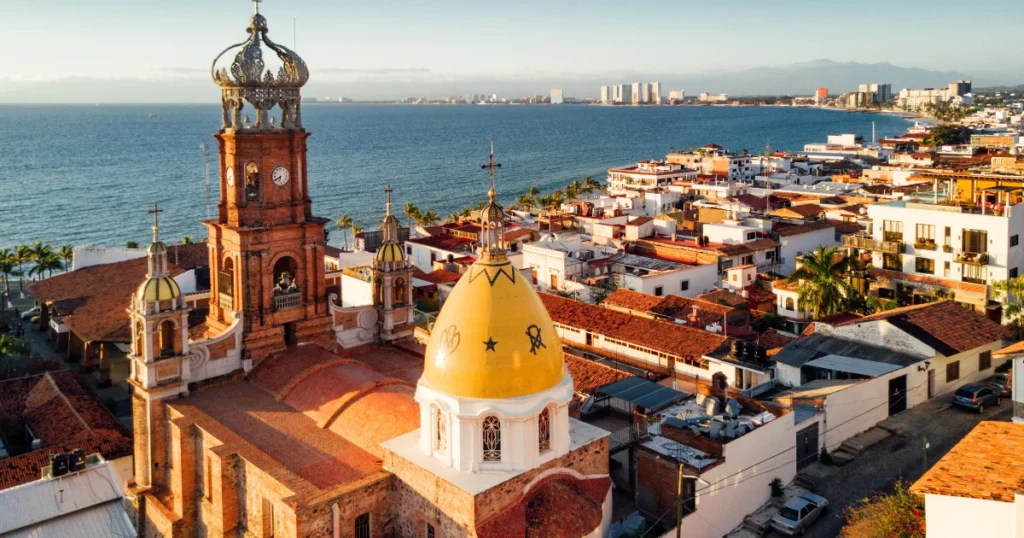
What It Actually Costs to Live in Puerto Vallarta as a Canadian (2026)
Here’s what $2,300 CAD a month buys you in Puerto Vallarta: a furnished one-bedroom in a real neighbourhood, tacos from the fonda on your corner, a bus pass that costs less than a Toronto coffee, and a sunset over the Pacific that never gets old. It’s not the resort brochure version of PV — it’s the one where locals live, where the snowbird community meets for coffee on Tuesday mornings, and where your pension actually covers your life with room to breathe.
Puerto Vallarta has been drawing Canadians south for decades, and the reasons haven’t changed. Direct flights from Toronto, Vancouver, Calgary, and Montreal. Excellent private hospitals 10 minutes from the beach. A compact, walkable downtown built around a community that exists year-round — not just during tourist season.
All figures below are in Canadian dollars.
This post contains affiliate links. We may earn a commission at no extra cost to you.
All figures in CAD. Based on early 2026 data. Exchange rates fluctuate — verify before making financial decisions.
The Monthly Numbers
| Expense | Budget (CAD/mo) | Mid-Range (CAD/mo) | Comfortable (CAD/mo) |
|---|---|---|---|
| Furnished 1BR apartment | $600-900 | $900-1,400 | $1,400-2,200 |
| Food (groceries + dining) | $250-400 | $400-600 | $600-900 |
| Transportation (bus + taxi/Uber) | $30-60 | $60-120 | $100-200 |
| Health insurance (private) | $60-120 | $120-200 | $200-350 |
| Utilities (electric, water, gas, internet) | $60-120 | $100-160 | $140-220 |
| Phone (prepaid SIM) | $10-20 | $15-25 | $20-35 |
| Entertainment / social | $80-180 | $180-350 | $300-550 |
| Total | $1,090-1,800 | $1,775-2,855 | $2,760-4,455 |
Seasonal price warning: PV has a pronounced high season (November-April) and low season (May-October). Snowbird-season rents in popular areas can be 30-50% higher than summer rates. If you’re here year-round, negotiate a 12-month lease to lock in a lower average.
What That Looks Like Next to Toronto
| Expense | Puerto Vallarta (Mid-Range) | Toronto (Equivalent) | Monthly Savings |
|---|---|---|---|
| Furnished 1BR | $900-1,400 | $2,200-2,800 | $1,000-1,400 |
| Food | $400-600 | $600-900 | $200-300 |
| Transport | $60-120 | $160-250 | $100-130 |
| Utilities + internet | $100-160 | $150-200 | $50-40 |
| Total | ~$2,300 | ~$4,200 | ~$1,900/mo |
Your Canadian pension stretches roughly 40-50% further in PV than in Toronto. That’s not just a number — it’s the difference between watching every dollar and actually enjoying your retirement. And you get beach weather, cheaper healthcare, and no winter heating bill.
Where to Live: Choosing Your PV
Puerto Vallarta is a real city — over 300,000 people live here year-round, most of them Mexican families, fishermen, service workers, and small business owners who’ve been here for generations. The tourist and expat areas get all the attention, but they’re a thin layer on top of a genuine community. Where you choose to live determines both your cost of living and how connected you’ll feel to the place you’re calling home.
Zona Romántica — The Expat Centre ($1,000-2,200 CAD)
South of the Río Cuale. Cobblestone streets, art galleries, the best restaurants, beach access, and the densest concentration of expats in the city. This is where most Canadians land first. Beautiful, walkable, vibrant — but you pay resort-town prices, especially during snowbird season. Summer rates drop significantly.
The Zona is charming but it’s a bubble. Prices are 30-40% higher than equivalent quality a few kilometres north, and the neighbourhood increasingly caters to visitors rather than the community that built it. If you stay, explore the streets beyond the tourist loop — the neighbourhood bakery, the produce vendor on Insurgentes, the taco stand that doesn’t have an English menu. That’s where the real PV lives.
Versalles / Fluvial Vallarta — Where PV Actually Lives ($600-1,000 CAD)
North of the tourist zone. This is where vallartenses — PV residents — live, work, and raise their families. Modern apartments, good supermarkets (Soriana, Chedraui), hospitals (San Javier, CMQ), and neighbourhood restaurants where a comida corrida runs $5-8 CAD and the menu is only in Spanish. Not on the beach, but 10-15 minutes by bus or Uber.
We’d steer most first-time Canadians here. The value is dramatically better than the Zona Romántica, and you’ll be living in a real Mexican neighbourhood — not next to it. Your neighbours will be families, teachers, and small business owners. The supermarket checkout clerk won’t switch to English. That’s a feature, not a bug.
Bucerías / La Cruz de Huanacaxtle — Beach Town North ($700-1,300 CAD)
Technically across the state line in Nayarit, 20-40 minutes north of PV. Small-town beach life — Sunday markets, fishing boats on the sand, uncrowded beaches. Bucerías has a devoted Canadian snowbird community. La Cruz has a marina and a legendary Thursday fish market where local fishermen sell the morning catch directly.
Quieter, more residential, more Mexican than the Zona Romántica. For a snowbird who wants the beach without the resort atmosphere, these towns deliver.
Pitillal — The Real Local Option ($450-750 CAD)
A working-class neighbourhood between the airport and the tourist zone. This is not expat PV — it’s a genuine Mexican neighbourhood with its own mercado, its own fiestas, and its own rhythm. Less polished by tourist standards, but it’s where many of the people who work in PV’s hotels and restaurants actually live. Some budget-conscious expats live here and spend their savings at the beach instead.
Spanish is essential. English is rare. That’s the deal.
The Hidden Costs
- High season premium: Renting November-April costs 30-50% more than May-October in popular areas. Arriving in October and signing a 12-month lease beats snowbird-season pricing.
- Air conditioning: PV is hot and humid, especially May-October. A/C is essential. Electricity (CFE) bills spike to $80-180 CAD/month with heavy use. Ask about electricity costs before signing a lease — older buildings and inefficient units cost more to cool.
- Flights home: Direct flights from major Canadian cities are seasonal (November-April). Summer flights connect through Mexico City or Guadalajara, adding cost and time. Budget $500-1,000 CAD return.
- Currency exchange: Your Canadian bank will charge 2-4% on every CAD to MXN transfer. Use Wise instead — over a year, the savings are hundreds of dollars. [Source: comparison of bank vs Wise transfer fees]
- Tourist-zone markup: Restaurants and services in the Zona Romántica charge 20-40% more than identical quality a few blocks into real neighbourhoods. The comida corrida that costs $12 on the malecón costs $6 in Versalles. Learn the local spots — your wallet and your neighbours will both appreciate it.
- Hurricane season: June-November. PV rarely takes a direct hit, but storms happen. Ensure your insurance covers weather events.
What Your Dollar Actually Buys
At $1,500 CAD/month: A basic apartment in Versalles or Pitillal. Eating at local fondas and tianguis. Bus rides to the beach. Not lavish, but functional — and you’re still in a beach town where the sunset is free and the taco on your corner costs $3. Note: this doesn’t include health insurance, which we consider non-negotiable. Realistic floor with insurance is closer to $1,800.
At $2,300 CAD/month: A nice 1BR in Versalles with A/C, or a smaller unit in the Zona Romántica. Mix of home cooking and neighbourhood restaurants. Weekend beach days. Occasional splurge on a sunset dinner. The sweet spot for most snowbirds — comfortable without excess.
At $4,000 CAD/month: An ocean-view or pool condo in the Zona Romántica. Dining out whenever you want. Private healthcare. Day trips to Sayulita or Yelapa. The beach retirement Canadians dream about over January dinner tables — at roughly half what a comparable lifestyle costs in Vancouver or Toronto.
Snowbird vs Year-Round
Snowbird (4-6 months, Nov-Apr): Prime weather, peak prices, peak social scene. Budget 30-50% more for rent. The Canadian community is at its most active. This is what PV is famous for.
Year-round: Summer (May-Oct) is hot, humid, and rainy — but rent drops dramatically and the town becomes quieter, more local, and more Mexican. The seasonal restaurants close, and the neighbourhood spots that were always there become your whole world. Some expats love the low-season vibe. Others can’t handle the humidity. If you can tolerate the heat, year-round living is significantly cheaper and, honestly, more rewarding. You stop being a snowbird and start being a neighbour.
The Bottom Line
PV isn’t the cheapest city in Mexico — that’s Mérida or certain parts of Mexico City. But it’s the most natural fit for Canadian snowbirds who want beach, community, healthcare, and direct flights home. For the full three-country comparison, see our Mexico vs Portugal vs Thailand breakdown.
Healthcare note: Your provincial health coverage lapses after 6-8 months abroad, and provincial plans don’t pay upfront for foreign medical costs. You need private replacement coverage. We break down the options in our insurance guide. [Source: Global Affairs Canada.]
Tax note: Non-residents face 25% CRA withholding on Canadian-source income including pensions. Tax treaties may reduce this. Talk to a cross-border tax accountant before you go, not after. [Source: CRA T4058, 2024.]
Download our free Budget Worksheet for Retirees — plug in your CPP, OAS, and pension income and see exactly where you land in Puerto Vallarta.
Want the full picture? The Mexico Relocation Kit ($59 CAD) covers the Temporary Resident Visa, banking, healthcare, neighbourhoods, and a 30-day action plan.
This guide is for informational purposes only. Visa requirements, costs, tax rules, and healthcare policies change — always confirm details with official sources and qualified professionals before making decisions. All costs in CAD unless noted.