This post contains affiliate links. If you purchase through our links, we may earn a small commission at no extra cost to you. We only recommend services we’d use ourselves. Full disclosure here.
Best Neighbourhoods in Porto for Expats on a Budget (2026 Rental Prices)
Porto is already the budget move. Compared to Lisbon, you’re saving 20-30% on rent before you even pick a neighbourhood. But within Porto, there’s a real spread — and the neighbourhood you choose is the single biggest lever on your monthly spend. A one-bedroom in Foz do Douro runs $1,200-1,800 CAD. A comparable apartment in Campanhã? $700-1,050. Same city, same metro system, same grilled fish.
This guide is for the expat who’s already decided on Porto and wants to know: where does my dollar actually go furthest? We’re covering six neighbourhoods — some central and walkable (you pay a bit more for convenience), some further out (you trade a metro ride for real savings). Each one with honest rent ranges, WiFi reliability, walkability, and the one thing nobody tells you before you sign the lease.
All rental prices in CAD for furnished one-bedrooms at ~1 CAD = 0.65 EUR. Based on early 2026 data.
Already comparing cities? Here’s our Lisbon vs Porto head-to-head.
The Budget Neighbourhood Grid
| Neighbourhood | 1BR Rent (CAD) | Transit | Walkability | Best For |
|---|---|---|---|---|
| Bonfim | $750-1,150 | Bus, 15-min walk to metro | ★★★★☆ | Remote workers wanting local character |
| Campanhã | $700-1,050 | Metro + train station | ★★★☆☆ | Budget maximizers, transit-dependent |
| Paranhos | $700-1,100 | Metro (multiple stops) | ★★★☆☆ | Students, young couples, quiet living |
| Cedofeita | $800-1,300 | Walking distance to everything | ★★★★★ | Walkability-first remote workers |
| Matosinhos | $700-1,100 | Metro (20 min to centre) | ★★★★☆ | Beach lovers, food lovers |
| Vila Nova de Gaia | $650-1,000 | Metro + bus | ★★★☆☆ | Lowest rent in the metro area |
For comparison: Lisbon’s cheapest central neighbourhoods (Campo de Ourique, Graça) start at $1,000-1,500 CAD for a furnished one-bedroom. Porto’s budget neighbourhoods start at $650. That gap is real, and it compounds every month. Over a year, the difference between a $1,300 Lisbon apartment and a $750 Porto apartment is $6,600 CAD — enough to fund a few flights home or several months of exploring northern Portugal and Spain. Full Lisbon cost breakdown: Cost of Living in Lisbon.
Bonfim — Local Character at a Real Price
Rent: $750-1,150 CAD | WiFi: Fiber available, 100-500 Mbps | Walkability: ★★★★☆
Bonfim is the neighbourhood that long-term expats in Porto quietly recommend to each other. It sits just east of the tourist centre — close enough to walk to Cedofeita’s cafés or the Ribeira waterfront, far enough that your rent isn’t subsidizing someone else’s Instagram photo.
The streets are residential but alive. Small grocery shops run by local families. The occasional bakery with a lineup of portuenses waiting for fresh bread at 7 AM. Corner tascas where the daily special is handwritten on a chalkboard and costs $8-10 CAD with a glass of house wine. Bonfim’s identity is working-class Porto — the kind of neighbourhood where your neighbour’s grandmother has lived on the same street for 50 years, and she’ll eventually say good morning back if you keep trying in Portuguese.
For remote workers, the practical case is strong. Fiber internet is widely available. Several good cafés double as work spots. You’re a 15-minute walk from Bolhão metro station, and the São Bento train station is 20 minutes on foot. The neighbourhood is mostly flat by Porto standards, with gentle slopes rather than the knee-destroying hills of Ribeira.
Who it’s best for: Remote workers who want genuine neighbourhood life, a walkable daily routine, and rent that leaves room in the budget for actually living.
The honest downside: No metro station in Bonfim proper. You’re relying on buses or walking to connect to the metro network. Fine in good weather. Less fun in Porto’s rainy winter months — and Porto gets rain from October through March.
Campanhã — The Transit Hub Budget Play
Rent: $700-1,050 CAD | WiFi: Fiber available, 100-300 Mbps | Walkability: ★★★☆☆
Campanhã is Porto’s eastern district, anchored by the Campanhã train and metro station — the city’s main transit hub. This is the neighbourhood that budget guides often overlook because it doesn’t photograph well. No charming cobblestone lanes, no trendy cafés. What it has: the lowest rents within Porto city limits, direct metro access, and a neighbourhood in the middle of a genuine transformation.
The Mercado do Bolhão’s renovation pushed some vendors to a temporary market in Campanhã, and the area around the new Campanhã intermodal terminal is being developed with cultural spaces and community markets. It’s early-stage — think east-end Toronto ten years ago. The existing community is working-class Portuguese, with a growing immigrant population from South Asia and West Africa. The neighbourhood feels real in a way that tourist Porto doesn’t.
From Campanhã station, you’re at Bolhão (city centre) in 5 minutes by metro, and at the airport in 25. Direct trains run to Lisbon, Braga, Guimarães, and the Douro Valley. If your Porto life involves regular travel, this is the logistically smartest budget neighbourhood.
Who it’s best for: Budget-first expats and couples who are comfortable trading atmosphere for savings and connectivity. P&D types exploring Portugal with Porto as a base.
The honest downside: It’s not pretty — yet. Parts of the neighbourhood feel rough around the edges. Evening walkability is limited. You’ll want to ride the metro to social life rather than walking to it.
Paranhos — Quiet, Student-Adjacent, Underrated
Rent: $700-1,100 CAD | WiFi: Fiber available, 100-500 Mbps | Walkability: ★★★☆☆
Paranhos is Porto’s university district — the University of Porto’s main campus sits here, along with the Polo Universitário metro stop. The student population keeps the neighbourhood practical: affordable restaurants, late-night convenience shops, copy centres, and cheap laundry services. But Paranhos is large enough that the residential streets away from campus feel quiet, green, and surprisingly suburban for a European city.
The Hospital de São João — Porto’s largest — is in Paranhos, which means pharmacies, clinics, and medical services are plentiful. For expats managing health conditions or wanting easy healthcare access, this is a genuine advantage.
Multiple metro stops serve Paranhos (IPO, Polo Universitário, São João), making it one of the best-connected budget neighbourhoods. You’re at Trindade (the central metro interchange) in about 10 minutes. The Parque da Cidade — Porto’s largest park — is a short bus ride west, connecting green space without the premium of Foz do Douro.
Who it’s best for: Young couples and solo expats who want affordable rent, good transit, and don’t need to live in the aesthetic centre. Especially strong if healthcare access matters.
The honest downside: It’s functional, not atmospheric. You won’t get the “living in Porto” feeling from your immediate surroundings. The neighbourhood can feel like a commuter zone. For the Instagram-worthy European life, you’ll metro into the centre.
Cedofeita — The Walk-Everywhere Sweet Spot
Rent: $800-1,300 CAD | WiFi: Fiber widely available, 100-1,000 Mbps | Walkability: ★★★★★
Cedofeita is the most expensive neighbourhood on this list — and it earns the premium. This is central Porto without the tourist tax. Rua de Cedofeita is the main street: independent shops, record stores, vintage clothing, craft beer, and cafés that welcome laptops until closing. The neighbourhood is Porto’s creative and cultural spine.
The walkability is the real selling point. From Cedofeita, you can walk to Bolhão market (10 minutes), the Ribeira waterfront (15 minutes), Boavista’s shopping (10 minutes), and the city’s best coworking spaces. No metro ride required for daily life. You save on transport and gain hours you’d otherwise spend commuting — hours that translate directly into quality of life.
Porto’s coworking scene clusters near Cedofeita. CRU Creative Business Centre, Porto i/o, and several smaller spots all sit within walking distance. Day passes run $15-25 CAD, monthly memberships $100-200 CAD. But honestly, half the cafés on Rua de Cedofeita are de facto coworking spaces — a coffee and a pastel de nata gets you a seat and good WiFi for the afternoon.
Who it’s best for: Remote workers, specifically. This is Porto’s best neighbourhood for a remote worker who wants to walk everywhere, work from cafés, and have a social life without planning around transit schedules.
The honest downside: At $800-1,300, it’s the highest rent on this budget list. Some streets get noisy on weekend evenings. And Cedofeita’s popularity with expats means you’ll hear more English than Portuguese in certain cafés — which means less immersion if that matters to you.
Matosinhos — Beach, Fish, and Value
Rent: $700-1,100 CAD | WiFi: Fiber available, 100-500 Mbps | Walkability: ★★★★☆
Technically a separate municipality, but connected to Porto by a metro line that takes 20 minutes to Trindade. Matosinhos has Porto’s best beach and Portugal’s best grilled fish — not a subjective claim, but close to a consensus among anyone who’s eaten along Rua Heróis de França, where charcoal smoke drifts from restaurant to restaurant and a whole grilled sea bass with potatoes and salad costs $12-15 CAD.
The fishing industry here is active, not decorative. The fishermen landing catches at the Matosinhos harbour are supplying the restaurants you’ll eat at tonight. The market (Mercado Municipal de Matosinhos) has some of the freshest seafood in the region. This is a community built around the sea, and it shows — a groundedness that sets Matosinhos apart from Porto’s more polished neighbourhoods.
For daily life, Matosinhos is flat, modern in parts, and practical. The waterfront promenade connects south to Foz do Douro, giving you a scenic walk or cycle along the coast. Surf culture is strong — if you’ve ever wanted to learn, lessons run $25-40 CAD. Groceries and daily essentials are cheaper here than in central Porto.
Who it’s best for: Expats who want a beach lifestyle at an inland price. Couples who value food culture and outdoor living. Anyone who’d rather spend their rent savings on experiences than a central postcode.
The honest downside: You’re 20 minutes from Porto’s centre by metro, and you’ll feel the distance on evenings when you want to go out. Matosinhos has its own nightlife, but it’s limited compared to Cedofeita or Boavista. On weekdays, the neighbourhood can feel sleepy by 9 PM.
Vila Nova de Gaia — The Cheapest Option in Metro Porto
Rent: $650-1,000 CAD | WiFi: Fiber available in most areas, 100-300 Mbps | Walkability: ★★★☆☆
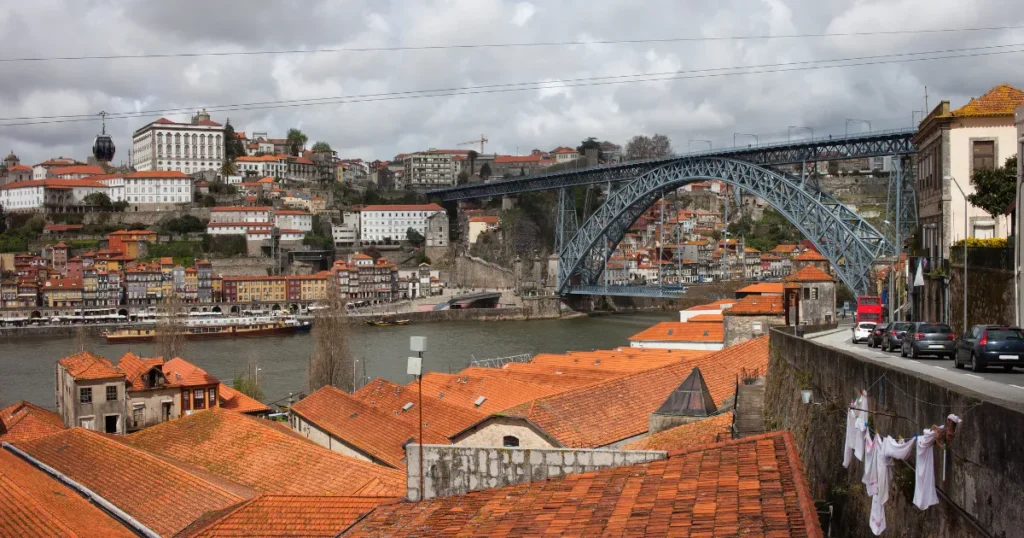
Gaia sits on the south bank of the Douro, technically a separate city, and home to the famous port wine lodges that have aged wine here since the 18th century. The riverfront — the Cais de Gaia — has the iconic view of Porto’s skyline across the water. That view doesn’t cost extra on your rent, and it’s something you never get tired of.
The savings are real. Gaia is consistently 20-30% cheaper than Porto proper for equivalent apartments. A furnished one-bedroom near the metro that would cost $1,000 in Boavista runs $700-800 in Gaia. The metro’s D line crosses the Luís I Bridge into Porto, connecting to Trindade in about 15 minutes. Buses are frequent. Some expats walk across the bridge daily — a 20-minute walk with one of the best urban views in Europe.
Beyond the tourist-facing riverfront, Gaia is a working Portuguese city. Shopping centres, supermarkets, healthcare facilities, schools. The further from the river you go, the more residential and affordable it gets. Areas around General Torres and Santo Ovídio metro stations are where the real budget deals live — functional, well-connected, and far from any tourist circuit.
Who it’s best for: Pure budget maximizers. Couples stretching a single income or savings. Anyone who’s comfortable living outside the main city and commuting in for the atmosphere.
The honest downside: You’re not living in Porto — you’re living near Porto. The identity difference matters to some people and not at all to others. Evening social life requires crossing the river. Parts of inland Gaia feel suburban in a way that doesn’t match the European city experience most expats imagine.
The Money Transfer Question
Your budget only works if the CAD-to-EUR conversion doesn’t eat it. Canadian banks charge 2.5-4% on foreign exchange — on a $1,500 monthly transfer, that’s $37-60 CAD lost every month, or $450-720 per year. Wise (formerly TransferWise) uses the mid-market rate with transparent fees, typically saving 1-3% compared to banks. If you’re moving money monthly, set up the transfer before you leave Canada. The savings over a year in Porto add up to a month’s groceries.
Language and Your Budget
Here’s something budget guides rarely mention: speaking Portuguese saves you money in Porto. Not metaphorically — literally. The cheapest rentals are listed on Portuguese-language platforms (OLX.pt, local Facebook groups). Landlords in budget neighbourhoods like Campanhã and Paranhos are less likely to speak English, and the ones who do sometimes charge a premium because they know they can. Learning even basic conversational Portuguese — enough to do a viewing, ask about utilities, negotiate a lease — opens up a tier of apartments that English-only renters never see.
Porto has less English than Lisbon. In the budget neighbourhoods on this list, significantly less. That’s not a warning — it’s an advantage if you put in the work. Language apps like Babbel or Preply can get you to functional Portuguese in a few months of consistent practice before you arrive. It’s one of the highest-ROI investments you can make for your Porto budget.
Our Picks by Situation
Lowest Possible Rent
Vila Nova de Gaia. Starting at $650 CAD. Accept the commute across the river. Save the difference.
Best Balance of Budget and Lifestyle
Bonfim. Local character, walkable daily life, rent that doesn’t sting. The neighbourhood we’d recommend to most budget-conscious remote workers landing in Porto for the first time.
Walk-Everywhere on a Moderate Budget
Cedofeita. The priciest on this list, but you save on transport and gain hours. If your time is worth more than $100-200/month, the walkability premium pays for itself.
Beach Life on a Budget
Matosinhos. Beach, fish, and a flat neighbourhood with character. Twenty minutes from Porto by metro. Hard to beat if you value outdoor living.
Exploring Portugal with Porto as a Base
Campanhã. Direct transit to Lisbon, the Douro, Braga, and Spain. Cheapest within Porto. Built for movement.
For the full Porto overview — visas, healthcare, renting process, NIF — see our Canadian Expat Guide to Porto. For visa specifics: D7 Visa Guide for Canadians.
Download our free Budget Worksheet — map your income against Porto expenses neighbourhood by neighbourhood.
Ready to plan the move? The Portugal Relocation Kit ($59 CAD) covers Porto and Lisbon — every neighbourhood in depth, the NIF and D7/D8 visa process, banking, healthcare, and a 30-day action plan to get you there.
This guide is for informational purposes only. Visa requirements, costs, tax rules, and healthcare policies change — always confirm details with official sources and qualified professionals before making decisions. All costs in CAD unless noted.