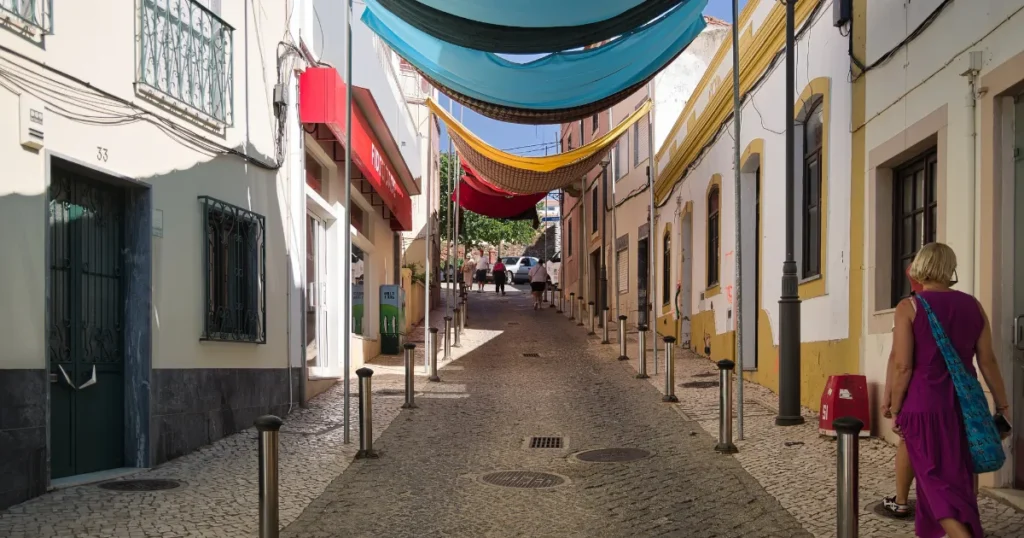
Best Neighbourhoods in Lisbon for Canadian Expats (2026)
Lisbon is built on seven hills. This isn’t a charming footnote in a travel guide — it’s the single most important factor in choosing where to live. Some neighbourhoods are gorgeous but punishing to walk. Others are flat but lack atmosphere. For a Canadian retiree with a knee replacement or a remote worker hauling a laptop and groceries up cobblestone, the hill question matters more than the rent question.
The city has over 200,000 foreign residents, with the Greater Lisbon metro area holding more than 600,000. Lisbon’s expat population has grown rapidly, and with it, rents — particularly in the central neighbourhoods foreigners gravitate to. If you’re still weighing the move itself, the Canadian expat guide to Lisbon walks through visas, costs, and settling in. This is a dynamic worth understanding: the neighbourhoods below are ranked for expat livability, but the communities that made them desirable were Portuguese long before any of us arrived. [Source: AIMA 2024.]
Here are six neighbourhoods worth considering, with honest assessments of the hills, the rent, and the community.
All rental prices in CAD for furnished one-bedrooms at ~1 CAD = 0.65 EUR. Based on early 2026 data.
The Neighbourhood Grid
| Neighbourhood | Rent (1BR, CAD) | Hills | Vibe | Retirees | Remote Workers |
|---|---|---|---|---|---|
| Príncipe Real | $1,300-2,000 | Moderate (plateau) | Charming, boutique, garden | ★★★★★ | ★★★★☆ |
| Campo de Ourique | $1,000-1,500 | Flat | Local, market, residential | ★★★★★ | ★★★★☆ |
| Estrela / Lapa | $1,100-1,700 | Moderate | Elegant, embassy district | ★★★★☆ | ★★★☆☆ |
| Santos / Cais do Sodré | $1,200-1,800 | Low (riverside) | Trendy, nightlife, coworking | ★★★☆☆ | ★★★★★ |
| Graça | $1,000-1,600 | Steep | Historic, views, atmospheric | ★★★☆☆ | ★★★★☆ |
| Parque das Nações | $1,100-1,600 | Flat | Modern, riverside, new builds | ★★★★☆ | ★★★☆☆ |
Príncipe Real — The Best All-Rounder
Rent: $1,300-2,000 CAD | Hills: Moderate (flat plateau once you’re up) | Safety: ★★★★★
A garden square (Jardim do Príncipe Real) surrounded by boutique shops, excellent restaurants, and quiet residential streets. This is Lisbon’s most desirable neighbourhood, and it earns it. Once you’re on the plateau, the area is relatively flat and walkable. Getting up from Bairro Alto or down to Baixa involves hills, but within Príncipe Real itself, daily life is manageable.
Beautiful without being touristy. A good mix of Portuguese residents and international expats. Morning walks in the garden. Walkable to Chiado’s shops and Bairro Alto’s restaurants without living in the noise. The neighbourhood’s Saturday organic market draws local families alongside expats — one of the few places in central Lisbon where the two communities overlap naturally.
The trade-off: Most expensive neighbourhood on this list. Parking is impossible. The approaches from lower Lisbon involve steep hills or stairs.
Campo de Ourique — Our Pick for Retirees
Rent: $1,000-1,500 CAD | Hills: Flat | Safety: ★★★★★
This is the neighbourhood we’d steer most Canadian retirees toward, and here’s why: flat streets. In a city defined by hills, Campo de Ourique’s grid layout is rare and precious.
But the flatness is just the start. The Mercado de Campo de Ourique — a traditional covered market — anchors the neighbourhood with fresh fish, produce, cheese, and a small food court where local families eat lunch. Every block has a bakery. The independent shops are owned by people who live here. The tram 28 rattles through connecting you to Alfama and Graça without the hills.
Campo de Ourique is the neighbourhood tourists rarely find, and the residents like it that way. This is where Lisboetas — Lisbon locals — live when they want community without noise. After a couple of weeks, the butcher recognizes you. The coffee shop knows your order. You stop being a foreigner and start being a neighbour. That’s the real value — and it costs 20-30% less than Príncipe Real.
The trade-off: Not exciting. No nightlife, few trendy restaurants. No metro station (tram and bus only, though a metro stop is planned). Tourists rarely visit — which is exactly the point.
Estrela / Lapa — Elegant Quiet
Rent: $1,100-1,700 CAD | Hills: Moderate | Safety: ★★★★★
Lisbon’s embassy district. Wide streets, grand buildings, the Basílica da Estrela and its garden — Jardim da Estrela, one of the loveliest parks in the city, where local families bring their children and elderly neighbours read newspapers on benches under the trees. Quiet, dignified, well-maintained.
Walking distance to both Campo de Ourique and Santos. Tram 28 passes through. A good balance of price and atmosphere — slightly more character than Parque das Nações, slightly less bustle than Príncipe Real.
The trade-off: Some hills heading toward Santos or Bairro Alto. Can feel overly quiet in the evenings. Fewer restaurants than Príncipe Real or Santos.
Santos / Cais do Sodré — The Remote Worker Hub
Rent: $1,200-1,800 CAD | Hills: Low (riverside) | Safety: ★★★★☆
Lisbon’s transformed riverside district. Time Out Market, LX Factory (markets, coworking, galleries), the Ribeira das Naus waterfront promenade. Flat along the river, with gentle slopes inland. The best coworking concentration in Lisbon (Second Home, Outsite, and enough café-offices to fill a week without repeating).
The train station (Cais do Sodré) connects directly to Cascais and Belém — meaning beach days and pastéis de nata at Pastéis de Belém are a 15-minute ride away. The ferry terminal runs quick crossings to Cacilhas, where you can eat fresh grilled fish on the south bank for half the price of the north.
Santos is also where you’ll see Lisbon’s multicultural reality most visibly. The neighbourhood’s proximity to the docks and the river has historically made it a landing place for new arrivals — Portuguese and immigrant alike. The restaurants reflect this: Cape Verdean grills, Brazilian juice bars, Mozambican bakeries alongside traditional tascas.
The trade-off: Weekend noise — Rua Cor de Rosa is a party street Thursday through Saturday. Tourist traffic around Time Out Market. Not a quiet residential neighbourhood.
Graça — Views and Deep Character
Rent: $1,000-1,600 CAD | Hills: Steep | Safety: ★★★★☆
One of Lisbon’s oldest neighbourhoods, perched above Alfama. The Miradouro da Graça and Miradouro da Senhora do Monte offer panoramic views that make you understand why painters have been coming here for centuries. Local character runs deep — traditional tascas where the prato do dia hasn’t changed in 30 years, neighbourhood shops where three generations know your name, the sound of fado drifting from an open window at dusk.
Graça is less touristy than Alfama below and more affordable than the western neighbourhoods. The community is genuine — Portuguese families, elderly neighbours who sit by their doorsteps in the afternoon, the kind of neighbourhood warmth that can’t be manufactured.
The trade-off: The hills are serious. Getting home means climbing steep cobblestone streets — beautiful to photograph, exhausting to live on. For anyone with mobility concerns, this is a dealbreaker. We love Graça for younger expats and anyone with strong knees. For retirees, visit often, live elsewhere.
Parque das Nações — Modern and Flat
Rent: $1,100-1,600 CAD | Hills: Flat | Safety: ★★★★★
Built for Expo ’98 on Lisbon’s eastern waterfront. Modern architecture, wide promenades, the Oceanarium, and the Vasco da Gama Bridge stretching across the Tagus. Completely flat. Modern apartments with elevators, proper insulation, and heating — rare in Lisbon, where older buildings leak warmth like sieves.
Excellent metro access from Oriente station (the city’s transit hub). Riverside walking and cycling paths. Everything is clean, organized, and functional.
The honest assessment: It lacks the layered history of older Lisbon — no cobblestone, no fado, no buildings that remember centuries of change. It feels purpose-built, because it was. Twenty minutes by metro from the Lisbon that people dream about. For retirees who prioritize modern comfort, accessibility, and flat terrain over atmosphere — this is a legitimate option. For anyone else, it’ll feel like you moved to Lisbon but forgot to live in Lisbon.
Our Picks
For Retirees
First choice: Campo de Ourique. Flat streets, daily market, neighbourhood community, affordable for Lisbon. The closest thing to “small-town life in a European capital.” The mercado alone is worth the choice — fresh fish and produce every morning, a food court for lunch, neighbours you’ll see daily.
If budget allows: Príncipe Real. More central, more beautiful, more to do — accept moderate hills on the approaches.
If modern comfort matters most: Parque das Nações. Flat, modern, well-insulated. Practical over atmospheric.
For Remote Workers
First choice: Santos / Cais do Sodré. Best coworking scene, flat riverside, walkable nightlife, transport connections. Accept the weekend noise.
Budget alternative: Graça. Cheaper, atmospheric, authentic — but the hills are the price of admission.
Beyond the Tourist Neighbourhoods
Worth noting: the surrounding municipalities have large and growing foreign populations — Sintra (96,587 foreign residents), Cascais (56,185), Amadora (55,573), Loures (51,834), Odivelas (51,032). [Source: AIMA 2024] If central Lisbon rents feel steep, these areas offer 20-40% savings with metro access. They’re less photogenic but more affordable, and in many cases, they’re where the immigrant communities that give Lisbon its multicultural richness actually live.
Lisbon is a genuinely multicultural city. Portugal’s historical connections with Africa and Brazil have created a visible, culturally present community — particularly from Angola, Cape Verde, Mozambique, and Brazil. Neighbourhoods like Mouraria and parts of Amadora have vibrant African cultural scenes, Cape Verdean music, and food that connects continents. This is one of the things that makes Lisbon feel different from most European capitals — and it’s worth seeking out, not just passing through.
For the full cost breakdown, see our Cost of Living in Lisbon guide. Comparing Lisbon to Porto? We did that side by side. For the D7 visa process, we have a full guide.
Healthcare: Provincial coverage lapses after 6-8 months abroad. You need private replacement insurance or SNS access through your D7 residency. Full breakdown in our insurance guide. [Source: Global Affairs Canada.]
Download our free Budget Worksheet — map your income against Lisbon expenses.
Planning the move? The Portugal Relocation Kit ($59 CAD) covers the D7 visa, NIF process, healthcare, all six neighbourhoods in depth, and a 30-day action plan.
This guide is for informational purposes only. Visa requirements, costs, tax rules, and healthcare policies change — always confirm details with official sources and qualified professionals before making decisions. All costs in CAD unless noted.