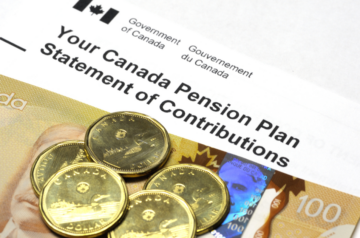
Canadian Pension Abroad: What Happens to CPP, OAS, and GIS When You Leave Canada
Your pension follows you. Your supplements don’t. Here’s exactly what changes.
If you’re a Canadian retiree thinking about living abroad — whether that’s six months as a snowbird or a permanent move — the pension question is probably near the top of your list.
The good news: your CPP and OAS go with you almost anywhere in the world. The mechanics are straightforward once you understand the rules.
The bad news: GIS stops, withholding tax takes a cut, and there are a few things you need to set up before you leave to avoid disruptions.
Here’s how each pension program works when you’re living outside Canada.
Important: Pension rules, tax treaties, and government programs change. This guide covers general principles as of early 2026. Always verify your specific situation with Service Canada (1-800-277-9914, or 1-613-957-1954 from outside Canada) and a qualified tax professional before making decisions.
CPP (Canada Pension Plan): Fully Portable
The short answer: CPP follows you anywhere. No restrictions on which country you live in. No time limit on how long you can be abroad.
How it works:
- CPP is based on your contributions during your working years — not on where you live when you collect it
- Payments continue monthly regardless of your country of residence
- You can receive payments by direct deposit into a Canadian bank account or a foreign bank account (Service Canada deposits to banks in many countries)
- Non-resident withholding tax is deducted at source if you’re classified as a non-resident (more on this below)
What you need to do before leaving:
- Update your address with Service Canada. If they can’t reach you, payments may be suspended until they verify you’re alive. (Yes, they send periodic proof-of-life requests.)
- Set up direct deposit. If you want payments in a foreign bank account, contact Service Canada to arrange this. Not all countries are supported — Canada has agreements with many, but verify yours.
- File Form NR301 with CRA to claim the reduced withholding tax rate under your country’s tax treaty. Without it, they withhold 25% instead of the treaty rate (15% for Mexico and Portugal; Thailand’s treaty has no rate cap, so 25% applies either way).
CPP amounts (2026): The maximum monthly CPP retirement pension depends on when you start collecting and your contribution history. The average monthly amount is significantly less than the maximum — most Canadians receive between $700 and $900 CAD per month. Verify your estimated amount through your My Service Canada Account online.
OAS (Old Age Security): Portable — With Conditions
The short answer: OAS is portable, but the rules depend on how long you lived in Canada.
If You Lived in Canada for 20+ Years After Age 18
OAS is fully portable indefinitely. You receive payments from anywhere in the world for as long as you’re eligible. No time limit. No requirement to return to Canada periodically.
This is the most common scenario for Canadian retirees moving abroad — if you’ve lived most of your adult life in Canada, you almost certainly meet the 20-year threshold.
If You Lived in Canada for 10-19 Years After Age 18
You can take OAS abroad only briefly: payments continue for the month you leave plus 6 more months, then stop until you re-establish Canadian residence (unless a social security agreement lets you count foreign residence toward the 20-year rule). Your OAS amount is prorated based on your years of residence (you receive 1/40th of the full OAS for each year you lived in Canada).
If You Lived in Canada for Less Than 10 Years After Age 18
You generally cannot receive OAS outside Canada unless a social security agreement between Canada and your country of residence allows it. Canada has agreements with Mexico and Portugal (but not Thailand) that may allow partial OAS based on combined residence periods.
OAS Clawback Abroad
The OAS clawback (recovery tax) applies to non-residents the same as residents. If your net world income exceeds the threshold (approximately $95,323 CAD in 2026, adjusted annually), OAS is reduced by 15 cents for every dollar above the threshold. Above roughly $154,000 CAD, OAS is fully clawed back.
For most retirees living on CPP + OAS + modest savings, the clawback doesn’t apply. But if you have significant RRSP withdrawals, rental income, or investment income, do the math.
OAS amounts (2026): The maximum monthly OAS payment is adjusted quarterly. As of early 2026, it’s approximately $700-730 CAD per month for someone with 40+ years of residence. Your actual amount depends on your years of residence in Canada. Check your estimate through My Service Canada Account.
GIS (Guaranteed Income Supplement): Stops When You Leave
The short answer: GIS payments stop after you’ve been outside Canada for 6 consecutive months. They do not resume until you return and re-establish residency in Canada.
This is the pension program that catches people off guard.
How it works:
- GIS is a monthly benefit for low-income OAS recipients living in Canada
- You can leave Canada temporarily and continue receiving GIS for up to 6 months
- After 6 months abroad, payments are suspended
- Payments resume only when you return to Canada, re-establish residency, and reapply
- There are no exceptions for tax treaties, social security agreements, or length of Canadian residence
Why this matters: GIS can be up to $1,000+ CAD per month for single low-income seniors. If GIS is a significant portion of your retirement income, losing it changes the financial math of living abroad dramatically.
Do the calculation: If you receive $600/month in GIS, that’s $7,200/year. Before you move abroad, make sure the lower cost of living in your destination actually offsets the loss of GIS. In many cases it does — especially in Mexico and Thailand where living costs are 40-60% lower than Canada. But it needs to be calculated, not assumed.
Tax Withholding on Pension Payments Abroad
When you become a non-resident of Canada, pension income (CPP, OAS, employer pensions, RRSP/RRIF withdrawals) is subject to non-resident withholding tax.
Default Rate: 25%
Without any action on your part, CRA withholds 25% of your pension payments. On a combined CPP + OAS payment of $1,500/month, that’s $375/month withheld — $4,500/year.
Treaty Rates (Reduced)
| Country | Treaty Rate on Pensions | Annual Savings on $1,500/mo |
|---|---|---|
| Mexico | 15% | $1,800/year saved vs 25% |
| Portugal | 15% | $1,800/year saved vs 25% |
| Thailand | 25% (treaty has no rate cap) | No treaty savings |
Treaty rates are general. Some pension types may have different provisions under specific treaties. Verify with a tax professional.
How to Get the Reduced Rate
- File Form NR301 (Declaration of Eligibility for Benefits Under a Tax Treaty) with the payer of your pension — Service Canada for CPP/OAS, your employer’s pension administrator for workplace pensions, your RRSP/RRIF provider for registered account withdrawals.
- The payer will reduce withholding to the treaty rate going forward.
- If you didn’t file NR301 and they’ve been withholding at 25%, file a Section 217 tax return to recover the difference. This can also reduce your effective rate below 15% if your total Canadian income is low enough.
For a detailed guide on Section 217 and RRSP/RRIF withholding, see our RRSP/RRIF withholding tax guide.
Practical Steps Before You Leave
3 Months Before Departure
- Log into My Service Canada Account. Verify your CPP and OAS amounts. Confirm your banking information is current.
- Calculate your total pension income abroad. CPP + OAS minus GIS loss minus withholding tax. Compare this to your estimated living costs in your destination. Use our cost-of-living guides for Mexico City, Lisbon, or Chiang Mai.
- Consult a cross-border tax professional. One session ($200-500 CAD) to map out your tax situation — residency status, withholding strategy, Section 217 eligibility. This saves you thousands over time.
1 Month Before Departure
- Notify Service Canada of your new address. Phone 1-800-277-9914 or update through My Service Canada Account.
- File Form NR301 with each payer of Canadian income (Service Canada, pension administrator, RRSP provider).
- Set up a power of attorney for someone in Canada to handle government correspondence on your behalf. Service Canada may send forms that need a response within a deadline.
- Set up international banking. Open a Wise account for transferring pension payments from your Canadian account to local currency. The exchange rate savings over bank wire transfers add up to hundreds of dollars per year.
After You Arrive
- Respond to proof-of-life requests. Service Canada periodically sends questionnaires to confirm you’re alive and still eligible. Respond promptly — missed responses lead to suspended payments.
- File your Canadian tax return. Whether you’re a non-resident filing a Section 217 return or a factual resident filing a T1, keep filing. See our guide to filing Canadian taxes from abroad.
- Monitor exchange rates. Your pension is paid in CAD. Your expenses are in pesos, euros, or baht. A favourable exchange rate effectively gives you a raise. An unfavourable one cuts your buying power. Wise and similar services let you convert when rates are good.
The Bottom Line
For most Canadian retirees with 20+ years of residence in Canada:
- CPP: Follows you anywhere. No interruption.
- OAS: Follows you anywhere if you have 20+ years of Canadian residence after age 18; with less, payments stop after 6 months abroad.
- GIS: Stops after 6 months abroad. Budget accordingly.
- Withholding tax: 15% with a tax treaty (file NR301). Potentially lower with Section 217.
The pension math usually works in favour of moving abroad. Even after losing GIS and paying withholding tax (15% in Mexico or Portugal, 25% in Thailand), the dramatically lower cost of living means your money stretches further. A $1,800/month pension that barely covers a Toronto apartment can fund a comfortable life in Mérida, Porto, or Chiang Mai.
Just do the math first. Know exactly what you’ll receive, what you’ll lose, and what your costs will be. The gap between “I think I can afford it” and “I’ve calculated it” is where bad decisions live.
For more on the financial side of moving abroad, see our RRSP/RRIF withholding tax guide, tax filing guide, or hidden costs of moving abroad.
Pension rules, benefit amounts, and tax treaties change. The information in this guide reflects general publicly available government guidelines as of early 2026. Always verify your specific pension amounts through My Service Canada Account and consult a qualified cross-border tax professional before making decisions. This guide is informational and does not constitute financial or tax advice.